CCU-Truck Computer Vision Dataset












About CCU-Truck Dataset
CCU-Truck Dataset
Dataset Overview
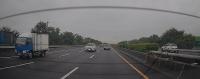
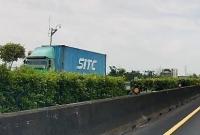
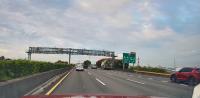
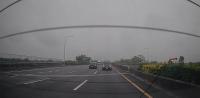
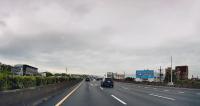
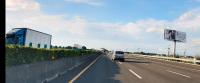
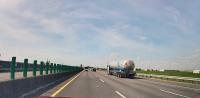
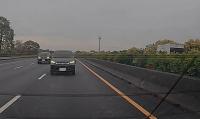
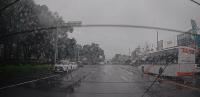
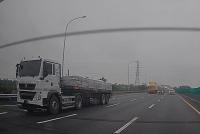
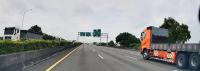
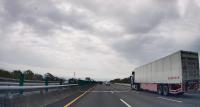
CCU-Truck is a scene-centric vehicle detection dataset collected from real-world traffic scenes in Taiwan. The dataset is designed for fine-grained truck and vehicle subclass detection, focusing on both common vehicles and special-purpose trucks that frequently appear in highway and road surveillance scenarios.
The dataset contains 1,083 annotated images with bounding-box labels for 12 vehicle categories. The images include complex traffic environments, different object scales, partial occlusions, diverse viewpoints, and visually similar vehicle subclasses, making the dataset suitable for evaluating object detection models under realistic traffic conditions.
Dataset Information
- Dataset Name: CCU-Truck
- Task Type: Object Detection
- Number of Images: 1,083
- Number of Classes: 12
- Annotation Format: YOLO format
- Image Format: JPG
- Application: Fine-grained vehicle and truck subclass detection
Annotation Classes
The dataset contains 12 classes:
- Class 0: box_truck
- Class 1: bus
- Class 2: car
- Class 3: concrete_mixer_truck
- Class 4: dump_truck
- Class 5: flatbed_truck
- Class 6: impact_attenuator_truck
- Class 7: mini_truck
- Class 8: mobile_crane
- Class 9: tanker_truck
- Class 10: tow_truck
- Class 11: tractor_unit
Annotation file format: text class_id x_center y_center width height
All bounding-box coordinates are normalized in YOLO format.
Annotation Distribution
| Class | Train | Valid | Test | Total Annotations | Percentage |
|---|---|---|---|---|---|
| car | 1,602 | 555 | 326 | 2,483 | 53.58% |
| box_truck | 519 | 177 | 86 | 782 | 16.88% |
| mini_truck | 248 | 73 | 41 | 362 | 7.81% |
| flatbed_truck | 160 | 50 | 32 | 242 | 5.22% |
| tanker_truck | 139 | 44 | 29 | 212 | 4.57% |
| dump_truck | 135 | 49 | 23 | 207 | 4.47% |
| bus | 136 | 42 | 18 | 196 | 4.23% |
| mobile_crane | 41 | 9 | 6 | 56 | 1.21% |
| impact_attenuator_truck | 17 | 16 | 5 | 38 | 0.82% |
| concrete_mixer_truck | 6 | 3 | 12 | 21 | 0.45% |
| tow_truck | 10 | 5 | 6 | 21 | 0.45% |
| tractor_unit | 6 | 4 | 4 | 14 | 0.30% |
Split-level Annotation Counts
- Training annotations: 3,019
- Validation annotations: 1,027
- Test annotations: 588
- Total annotations: 4,634
Dataset Structure
CCU-Truck/
├── train/
│   ├── images/        # Training image files
│   └── labels/        # YOLO-format training labels
├── valid/
│   ├── images/        # Validation image files
│   └── labels/        # YOLO-format validation labels
├── test/
│   ├── images/        # Test image files
│   └── labels/        # YOLO-format test labels
└── README.md
Usage Instructions
- The dataset can be downloaded from Roboflow.
- The dataset supports YOLO-format object detection training.
- The dataset can be used for training and evaluating fine-grained vehicle detection models.
- The validation and test splits can be used to evaluate detection performance on scene-centric traffic images.
Use Free Car, Bus and Box_truck Detection API
Powered by general detection model
pip install inference-sdk# 1. Import the library
from inference_sdk import InferenceHTTPClient
# 2. Connect to your workspace
client = InferenceHTTPClient(
api_url="https://serverless.roboflow.com",
api_key="API_KEY"
)
# 3. Run your workflow on an image
result = client.run_workflow(
workspace_name="<YOUR_WORKSPACE>",
workflow_id="<YOUR_WORKFLOW_ID>",
images={
"image": "YOUR_IMAGE.jpg" # Path to your image file
},
parameters={
"classes": "car, bus, box_truck, concrete_mixer_truck, dump_truck"
},
use_cache=True # cache workflow definition for 15 minutes
)
# 4. Get your results
print(result)Run on custom image
Drop an image here or click to upload
Tell the agent what you want to build.
Cite This Project
LicenseCC BY 4.0If you use this dataset in a research paper, please cite it using the following BibTeX:
@misc{ ccu-truck_dataset,
  title = { CCU-Truck Dataset },
  type = { Open Source Dataset },
  author = { VisLab },
  howpublished = { \url{ https://universe.roboflow.com/vislab-ze0dn/ccu-truck } },
  url = { https://universe.roboflow.com/vislab-ze0dn/ccu-truck },
  journal = { Roboflow Universe },
  publisher = { Roboflow },
  year = { 2026 },
  month = { jun },
  note = { visited on 2026-07-29 },
}