leaf_area_trimming Computer Vision Model
How to use the leaf_area_trimming Detection API
Try This Model
Drop an image here or click to upload
Code Snippets
from inference_sdk import InferenceHTTPClient

CLIENT = InferenceHTTPClient(
    api_url="https://serverless.roboflow.com",
    api_key="API_KEY"
)

result = CLIENT.infer("YOUR_IMAGE.jpg", model_id="leaf_area_trimming/1")Or, Use Free Center_area and Not_center_area Detection API
Powered by general detection model
pip install inference-sdk# 1. Import the library
from inference_sdk import InferenceHTTPClient
# 2. Connect to your workspace
client = InferenceHTTPClient(
api_url="https://serverless.roboflow.com",
api_key="API_KEY"
)
# 3. Run your workflow on an image
result = client.run_workflow(
workspace_name="<YOUR_WORKSPACE>",
workflow_id="<YOUR_WORKFLOW_ID>",
images={
"image": "YOUR_IMAGE.jpg" # Path to your image file
},
parameters={
"classes": "center_area, not_center_area"
},
use_cache=True # cache workflow definition for 15 minutes
)
# 4. Get your results
print(result)Run on custom image
Drop an image here or click to upload









About leaf_area_trimming Model
Here are a few use cases for this project:
-
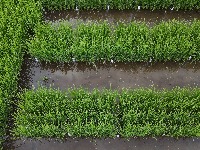
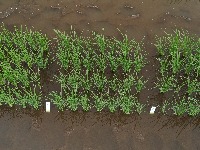
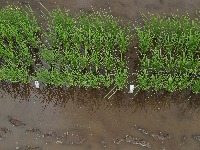
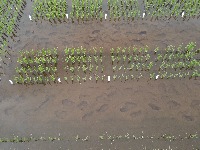
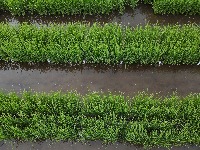
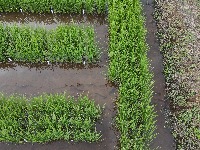
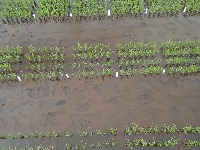
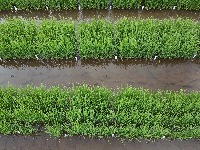
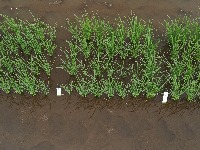
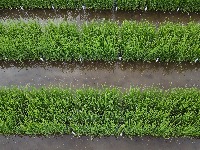
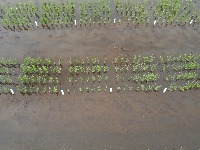
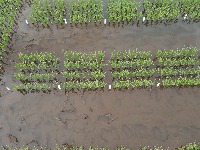
Crop Health Analysis: The "leaf_area_trimming" model can be used by agronomists to efficiently identify areas of crop fields that need attention. By categorizing the leaves as not_center_area, or center_area, they can assess the health of different sections and effectively plan treatment strategies.
-
Autonomous Farming: This model can be employed in smart farming tech like autonomous drones or tractors to precisely apply fertilizers or pesticides. The machine can use the data to deliver resources exactly where needed in a field, reducing waste and increasing crop yield.
-
Plant Breeding: Breeders can use this model to assist in their plant breeding efforts, by analyzing leaf areas to select plants exhibiting superior traits, such as denser center_area or healthier not_center_area leaves, thus assisting in creating new, optimal strains.
-
Biological Research: Ecologists or biologists could employ the model to classify and study leaf pattern variations in different ecosystems, helping to understand how environmental changes impact flora behavior.
-
Precision Irrigation: By identifying the different areas of the leaves, the model could provide insight for precision irrigation systems, enabling them to deliver water more efficiently to the plants and ensuring optimal growth conditions.
Tell the agent what you want to build.
Cite This Project
LicenseCC BY 4.0If you use this dataset in a research paper, please cite it using the following BibTeX:
@misc{ leaf_area_trimming_dataset,
  title = { leaf_area_trimming Dataset },
  type = { Open Source Dataset },
  author = { TillerCountingareatrimming },
  howpublished = { \url{ https://universe.roboflow.com/tillercountingareatrimming/leaf_area_trimming } },
  url = { https://universe.roboflow.com/tillercountingareatrimming/leaf_area_trimming },
  journal = { Roboflow Universe },
  publisher = { Roboflow },
  year = { 2023 },
  month = { aug },
  note = { visited on 2026-07-29 },
}