nih-xray-fsod-sbyy Computer Vision Dataset












About nih-xray-fsod-sbyy Dataset
Overview
Introduction
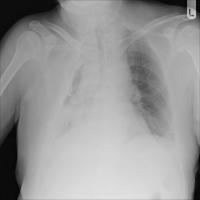
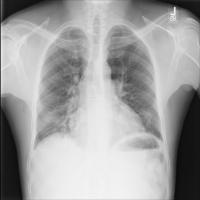
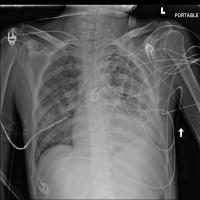
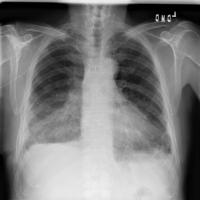
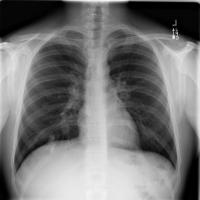
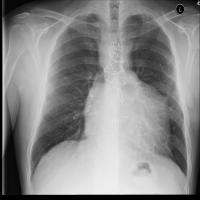
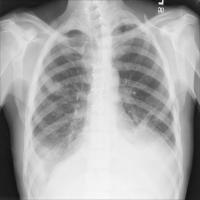
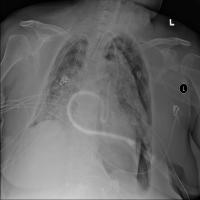
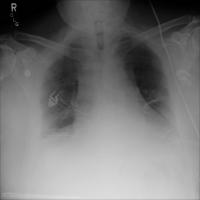
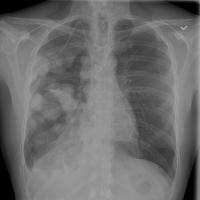
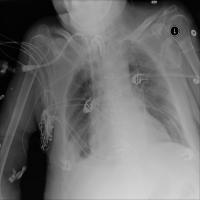
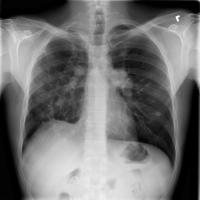
This dataset contains chest X-ray images annotated for detecting various thoracic diseases. The dataset addresses the task of identifying specific abnormalities within the lungs.
- Atelectasis: Partial or complete collapse of a lung or lobe.
- Cardiomegaly: Enlargement of the heart.
- Effusion: Accumulation of fluid in the pleural cavity.
- Infiltrate: Presence of denser substances in the lungs, often indicative of inflammation.
- Mass: A larger area indicating potential malignancy.
- Nodule: A small, round or oval-shaped spot in the lung.
- Pneumonia: Infection that inflames the air sacs.
- Pneumothorax: Collapsed lung due to air in the chest.
Object Classes
Atelectasis
Description
Atelectasis appears as a blurring or loss of clarity in the lung area, often near the lung base.
Instructions
Identify areas where clarity in the lung structure diminishes and boundaries become blurred, particularly towards the lung bases. Avoid areas with distinct lung markings or other pathologies.
Cardiomegaly
Description
Cardiomegaly is indicated by a broader cardiac silhouette exceeding the normal lung-heart outline ratios.
Instructions
Draw a bounding box that encompasses the heart if its silhouette extends into the lung areas noticeably more than usual. Do not include areas outside the cardiac outline.
Effusion
Description
Effusion presents as a dimmed, flat shadow at the lung base, indicating fluid accumulation.
Instructions
Look for uniform, smooth shadows at the lung bases. Delineate clearly where fluid outlines are smooth and horizontal, avoiding irregular opacities.
Infiltrate
Description
Infiltrates show as streaky, cloudy regions scattered within the lung field.
Instructions
Mark areas where streakiness or clouding interrupts regular lung patterns, being cautious not to confuse with nodules or masses.
Mass
Description
A mass is a large, localized opacity with clear boundaries, potentially overlying lung structures.
Instructions
Outline large, distinct opacities with well-defined edges. Ensure not to include small, round opacities that fit the nodule description.
Nodule
Description
Nodules are small, round opacities that stand out against the lung background.
Instructions
Identify small, well-circumscribed round spots, ensuring they are distinct from larger masses or infiltrate-like entities.
Pneumonia
Description
Pneumonia areas have patchy or uniform clouding, often distributed across specific lobes.
Instructions
Highlight areas with patchy, uniform clouding, generally across lobes, without distinct solid borders like masses.
Pneumothorax
Description
Pneumothorax is shown by visibility of the visceral pleural line with no vessel markings beyond.
Instructions
Mark regions where a clear pleural line can be seen without any vascular markings beyond it towards the chest wall. Avoid mislabeling lung collapse regions not conforming to air presence.
Use Free Atelectasis, Cardiomegaly and Effusion Detection API
Powered by general detection model
pip install inference-sdk# 1. Import the library
from inference_sdk import InferenceHTTPClient
# 2. Connect to your workspace
client = InferenceHTTPClient(
api_url="https://serverless.roboflow.com",
api_key="API_KEY"
)
# 3. Run your workflow on an image
result = client.run_workflow(
workspace_name="<YOUR_WORKSPACE>",
workflow_id="<YOUR_WORKFLOW_ID>",
images={
"image": "YOUR_IMAGE.jpg" # Path to your image file
},
parameters={
"classes": "Atelectasis, Cardiomegaly, Effusion, Infiltrate, Mass"
},
use_cache=True # cache workflow definition for 15 minutes
)
# 4. Get your results
print(result)Run on custom image
Drop an image here or click to upload
Tell the agent what you want to build.
Cite This Project
LicenseMITIf you use this dataset in a research paper, please cite it using the following BibTeX:
@misc{ nih-xray-fsod-sbyy_dataset,
  title = { nih-xray-fsod-sbyy Dataset },
  type = { Open Source Dataset },
  author = { Roboflow100VL FSOD },
  howpublished = { \url{ https://universe.roboflow.com/roboflow100vl-fsod/nih-xray-fsod-sbyy } },
  url = { https://universe.roboflow.com/roboflow100vl-fsod/nih-xray-fsod-sbyy },
  journal = { Roboflow Universe },
  publisher = { Roboflow },
  year = { 2026 },
  month = { jan },
  note = { visited on 2026-07-29 },
}