Meta Computer Vision Model
How to use the Meta Segmentation API
Try This Model
Drop an image here or click to upload
Code Snippets
from inference_sdk import InferenceHTTPClient

CLIENT = InferenceHTTPClient(
    api_url="https://serverless.roboflow.com",
    api_key="API_KEY"
)

result = CLIENT.infer("YOUR_IMAGE.jpg", model_id="meta-mkxdc/1")Or, Use Free Metacarpus Detection API
Powered by general detection model
pip install inference-sdk# 1. Import the library
from inference_sdk import InferenceHTTPClient
# 2. Connect to your workspace
client = InferenceHTTPClient(
api_url="https://serverless.roboflow.com",
api_key="API_KEY"
)
# 3. Run your workflow on an image
result = client.run_workflow(
workspace_name="<YOUR_WORKSPACE>",
workflow_id="<YOUR_WORKFLOW_ID>",
images={
"image": "YOUR_IMAGE.jpg" # Path to your image file
},
parameters={
"classes": "Metacarpus"
},
use_cache=True # cache workflow definition for 15 minutes
)
# 4. Get your results
print(result)Run on custom image
Drop an image here or click to upload












About Meta Model
Here are a few use cases for this project:
-
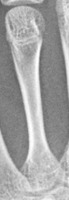
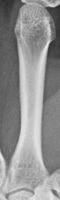
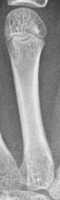
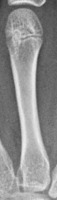
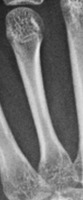
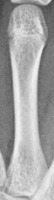
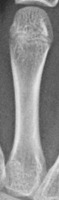
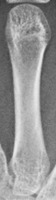
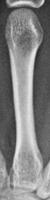
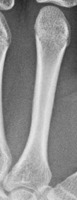
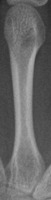
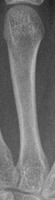
Medical Education and Training: Meta can be used as a teaching aid for medical students, residents, and professionals to help them accurately identify and differentiate various metacarpal bones and their classes, aiding in the understanding of human anatomy and improving diagnostic skills.
-
Virtual and Augmented Reality Applications: The Meta model can be integrated into virtual and augmented reality applications to create immersive and interactive experiences for learning or exploring the human skeletal system, specifically focusing on the metacarpus.
-
Rehabilitation and Orthopedic Care: Meta can assist physiotherapists and orthopedic specialists in diagnosing and assessing hand injuries by providing quick and accurate classification of metacarpal bones, helping to determine appropriate treatment plans and monitor progress during rehabilitation.
-
Forensic Anthropology: The computer vision model can be applied in forensic anthropology to analyze skeletal remains, allowing experts to identify metacarpus classes in the remains, which can provide valuable information about the individual, such as age, sex, or ancestry.
-
Bioarchaeological research: Meta can be utilized in bioarchaeological studies to better understand the evolution of the metacarpus in human populations and identify morphological variations across different geographical regions or time periods, contributing to broader evolutionary and anthropological research.
Tell the agent what you want to build.
Cite This Project
LicenseCC BY 4.0If you use this dataset in a research paper, please cite it using the following BibTeX:
@misc{ meta-mkxdc_dataset,
  title = { Meta Dataset },
  type = { Open Source Dataset },
  author = { HF },
  howpublished = { \url{ https://universe.roboflow.com/hf-w1rwi/meta-mkxdc } },
  url = { https://universe.roboflow.com/hf-w1rwi/meta-mkxdc },
  journal = { Roboflow Universe },
  publisher = { Roboflow },
  year = { 2022 },
  month = { sep },
  note = { visited on 2026-07-29 },
}