accessibility object detection Computer Vision Model
How to use the accessibility object detection Detection API
Try This Model
Drop an image here or click to upload
Code Snippets
from inference_sdk import InferenceHTTPClient

CLIENT = InferenceHTTPClient(
    api_url="https://serverless.roboflow.com",
    api_key="API_KEY"
)

result = CLIENT.infer("YOUR_IMAGE.jpg", model_id="accessibility-object-detection/2")Or, Use Free Person, Accesibility-features and Accessibility_symbol Detection API
Powered by general detection model
pip install inference-sdk# 1. Import the library
from inference_sdk import InferenceHTTPClient
# 2. Connect to your workspace
client = InferenceHTTPClient(
api_url="https://serverless.roboflow.com",
api_key="API_KEY"
)
# 3. Run your workflow on an image
result = client.run_workflow(
workspace_name="<YOUR_WORKSPACE>",
workflow_id="<YOUR_WORKFLOW_ID>",
images={
"image": "YOUR_IMAGE.jpg" # Path to your image file
},
parameters={
"classes": "person, accesibility-features, accessibility_symbol, doors, elevator"
},
use_cache=True # cache workflow definition for 15 minutes
)
# 4. Get your results
print(result)Run on custom image
Drop an image here or click to upload








About accessibility object detection Model
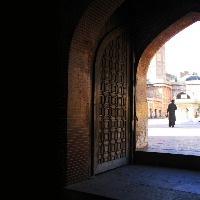
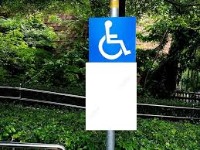
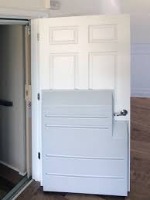
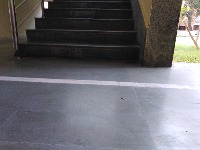
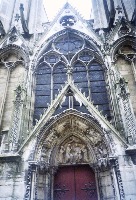
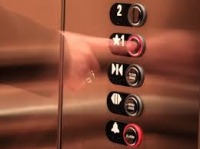
In this data annotation project, I am focusing on training accessibility features such as ramps, potholes, accessibility symbols, persons, and stairs. The objective of the project is to create a high-quality, annotated dataset that can be used for training an object detection model to recognize these important features in various environments.
The source of the images used for this project includes diverse datasets such as Kaggle, Google Images, and the COCO dataset. These sources provide a wide variety of scenarios and settings, ensuring that the annotated data encompasses different lighting conditions, angles, and backgrounds.
The annotation process involves meticulously marking the accessibility features in each image, ensuring precise bounding boxes and class labels for accurate training data. This careful attention to detail will contribute to developing a robust and reliable model that can accurately identify and classify accessibility features in real-world scenarios.
By completing this data annotation project, I aim to contribute to the development of models that can enhance accessibility and safety in public spaces and urban environments.
Data Sources:
-
https://www.kaggle.com/datasets/nderalparslan/dwsonder Alparslan, Ö., Özcan, A. & Çetin, Ö. (2022). Model ve Veri Odaklı Yaklaşımlar ile Nesne Tespit Başarısının Arttırılmasına Yönelik ESA ve Veri Seti Optimizasyonları . Mühendislik Bilimleri ve Araştırmaları Dergisi , 4 (2) , 121-128 . DOI: 10.46387/bjesr.1106501
-
Google images
Tell the agent what you want to build.
Cite This Project
LicenseCC BY 4.0If you use this dataset in a research paper, please cite it using the following BibTeX:
@misc{ accessibility-object-detection_dataset,
  title = { accessibility object detection Dataset },
  type = { Open Source Dataset },
  author = { Custom Object Detection },
  howpublished = { \url{ https://universe.roboflow.com/custom-object-detection-vvwt6/accessibility-object-detection } },
  url = { https://universe.roboflow.com/custom-object-detection-vvwt6/accessibility-object-detection },
  journal = { Roboflow Universe },
  publisher = { Roboflow },
  year = { 2024 },
  month = { apr },
  note = { visited on 2026-07-29 },
}