Hard Hat Detection Computer Vision Model
How to use the Hard Hat Detection Detection API
Try This Model
Drop an image here or click to upload
Code Snippets
from inference_sdk import InferenceHTTPClient

CLIENT = InferenceHTTPClient(
    api_url="https://serverless.roboflow.com",
    api_key="API_KEY"
)

result = CLIENT.infer("YOUR_IMAGE.jpg", model_id="hard-hat-detection-tpqie/2")Or, Use Free No Helmet and With Helmet Detection API
Powered by general detection model
pip install inference-sdk# 1. Import the library
from inference_sdk import InferenceHTTPClient
# 2. Connect to your workspace
client = InferenceHTTPClient(
api_url="https://serverless.roboflow.com",
api_key="API_KEY"
)
# 3. Run your workflow on an image
result = client.run_workflow(
workspace_name="<YOUR_WORKSPACE>",
workflow_id="<YOUR_WORKFLOW_ID>",
images={
"image": "YOUR_IMAGE.jpg" # Path to your image file
},
parameters={
"classes": "No Helmet, With Helmet"
},
use_cache=True # cache workflow definition for 15 minutes
)
# 4. Get your results
print(result)Run on custom image
Drop an image here or click to upload
















About Hard Hat Detection Model
Here are a few use cases for this project:
-
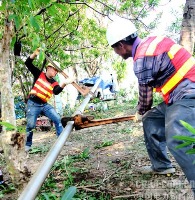
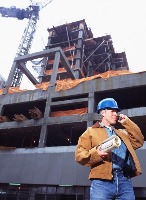
Construction Site Safety Monitoring: This computer vision model can be used in real-time monitoring of construction sites. It can help ensure all workers on site are wearing protective equipment like hard hats. Coupling this model with alert systems can enhance occupational safety in these high-risk work environments.
-
Industrial Compliance Auditing: For industries such as construction, mining, and manufacturing where wearing a hard hat is legally mandatory, this model can be used to automate compliance to safety regulations. The model can generate compliance reports detailing instances of hard hat usage, potentially reducing the risk of injuries and legal repercussions.
-
Automated Entry Control in Risky Areas: In oil refineries, construction zones, or power plants where people without a hard hat shouldn't be allowed for safety reasons, this model can be integrated with entry control systems to automatically restrict access to individuals not wearing one.
-
Augmented Reality Training: This model could be used in a virtual or augmented reality environment to train employees about the importance of wearing a helmet. The model can help create scenarios where the lack of a helmet leads to injuries or other negative outcomes, strengthening safety culture.
-
Helmet Analysis in Crowded Events: For motorcycle rallies or similar crowded events, this model can also be instrumental in analyzing how many attendees are wearing helmets and if any safety directives to wear one are being followed. This can help in understanding the effectiveness of such instructions and devising strategies for better compliance.
Tell the agent what you want to build.
Cite This Project
LicenseCC BY 4.0If you use this dataset in a research paper, please cite it using the following BibTeX:
@misc{ hard-hat-detection-tpqie_dataset,
  title = { Hard Hat Detection Dataset },
  type = { Open Source Dataset },
  author = { Alerty },
  howpublished = { \url{ https://universe.roboflow.com/alerty-c0xry/hard-hat-detection-tpqie } },
  url = { https://universe.roboflow.com/alerty-c0xry/hard-hat-detection-tpqie },
  journal = { Roboflow Universe },
  publisher = { Roboflow },
  year = { 2024 },
  month = { jan },
  note = { visited on 2026-07-29 },
}