Tenebrio AI Detection Computer Vision Model
How to use the Tenebrio AI Detection Detection API
Try This Model
Drop an image here or click to upload
Code Snippets
from inference_sdk import InferenceHTTPClient

CLIENT = InferenceHTTPClient(
    api_url="https://serverless.roboflow.com",
    api_key="API_KEY"
)

result = CLIENT.infer("YOUR_IMAGE.jpg", model_id="tenebrio-ai-detection/2")Or, Use Free Beetle, Dead-larvae and Larvae Detection API
Powered by general detection model
pip install inference-sdk# 1. Import the library
from inference_sdk import InferenceHTTPClient
# 2. Connect to your workspace
client = InferenceHTTPClient(
api_url="https://serverless.roboflow.com",
api_key="API_KEY"
)
# 3. Run your workflow on an image
result = client.run_workflow(
workspace_name="<YOUR_WORKSPACE>",
workflow_id="<YOUR_WORKFLOW_ID>",
images={
"image": "YOUR_IMAGE.jpg" # Path to your image file
},
parameters={
"classes": "beetle, dead-larvae, larvae, pupa"
},
use_cache=True # cache workflow definition for 15 minutes
)
# 4. Get your results
print(result)Run on custom image
Drop an image here or click to upload

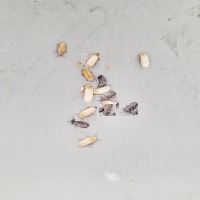
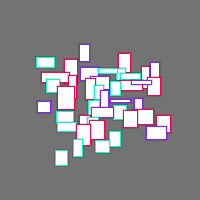
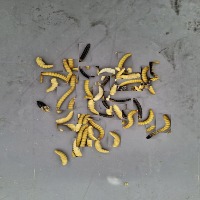

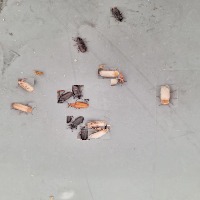
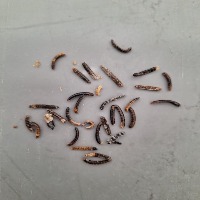

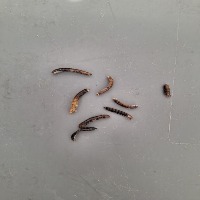

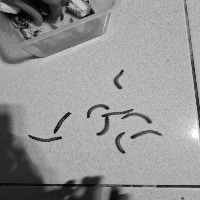

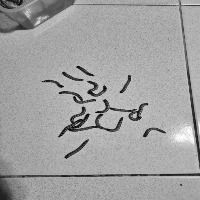

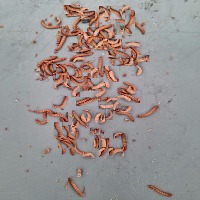
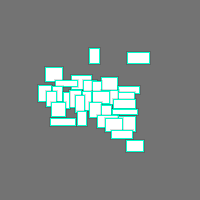
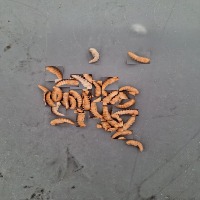

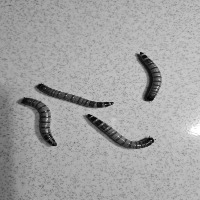

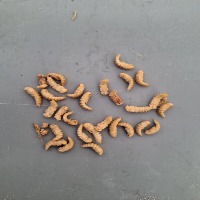

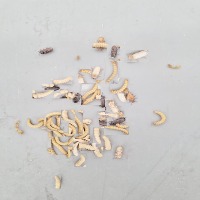
About Tenebrio AI Detection Model

Welcome to the preliminary phase of our mealworm detection and identification model — an innovative initiative driven by computer vision, carefully developed in collaboration with the Laboratory of Bioinformatics and Omics Sciences (LaBiOmics) at the University of Mogi das Cruzes (UMC), under the supervision of Prof. Dr. Fabiano B. Menegidio.
Explore the World of Edible Insects:
In a global scenario where the search for sustainable food sources is on the rise, insects are emerging as a promising solution. In particular, mealworms have gained prominence for their nutritional value and the reduced environmental impact associated with their cultivation.
Our computer vision project, dedicated to the detection and identification of mealworms, stands as a pivotal advancement in this movement. It offers an efficient and precise tool to support the sustainable production of edible insects.
Innovative Solutions through Computer Vision:
Developed on the Roboflow platform, our model harnesses the latest strides in computer vision to identify and categorize mealworms with exceptional accuracy. Driven by intelligent algorithms and specialized training, this tool can distinguish between different developmental stages of the mealworm, providing a comprehensive solution for producers and researchers alike.
Importance for Biotechnology, Biomedical Engineering, and Public Policies:
Furthermore, we highlight the relevance of this project to the fields of Biotechnology and Biomedical Engineering. The ability to identify and understand mealworms through computer vision has significant implications in biomedical research, opening doors for studies on potential medicinal and pharmaceutical applications of these insects.
Moreover, the project also stands out in the realm of public policies, providing a valuable tool for governments and organizations seeking to promote sustainable and safe agricultural practices, aligned with the growing demands for food and environmental concerns.
Tell the agent what you want to build.
Cite This Project
LicenseCC BY 4.0If you use this dataset in a research paper, please cite it using the following BibTeX:
@misc{ tenebrio-ai-detection_dataset,
  title = { Tenebrio AI Detection Dataset },
  type = { Open Source Dataset },
  author = { InsectIA Detect },
  howpublished = { \url{ https://universe.roboflow.com/insectia-detect-vn18h/tenebrio-ai-detection } },
  url = { https://universe.roboflow.com/insectia-detect-vn18h/tenebrio-ai-detection },
  journal = { Roboflow Universe },
  publisher = { Roboflow },
  year = { 2023 },
  month = { nov },
  note = { visited on 2026-07-29 },
}