Artificial_Seed_Chip Computer Vision Model
How to use the Artificial_Seed_Chip Detection API
Try This Model
Drop an image here or click to upload
Code Snippets
from inference_sdk import InferenceHTTPClient

CLIENT = InferenceHTTPClient(
    api_url="https://serverless.roboflow.com",
    api_key="API_KEY"
)

result = CLIENT.infer("YOUR_IMAGE.jpg", model_id="artificial_seed_chip/15")Or, Use Free I-Seed Blue, I-Seed Brown and I-Seed Green Detection API
Powered by general detection model
pip install inference-sdk# 1. Import the library
from inference_sdk import InferenceHTTPClient
# 2. Connect to your workspace
client = InferenceHTTPClient(
api_url="https://serverless.roboflow.com",
api_key="API_KEY"
)
# 3. Run your workflow on an image
result = client.run_workflow(
workspace_name="<YOUR_WORKSPACE>",
workflow_id="<YOUR_WORKFLOW_ID>",
images={
"image": "YOUR_IMAGE.jpg" # Path to your image file
},
parameters={
"classes": "I-Seed Blue, I-Seed Brown, I-Seed Green"
},
use_cache=True # cache workflow definition for 15 minutes
)
# 4. Get your results
print(result)Run on custom image
Drop an image here or click to upload















About Artificial_Seed_Chip Model
Here are a few use cases for this project:
-
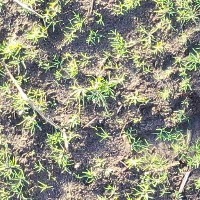
Agriculture and Planting: The Artificial_Seed_Chip model can be used to help farmers and agricultural scientists identify the optimal I-Seed classes for different soil types and weather conditions, enabling them to achieve better crop yields and improve farm management practices.
-
Environment and Biodiversity: By identifying the different I-Seed classes, researchers and ecologists can study their prevalence in various ecosystems, monitor their impact on local biodiversity, and develop strategies to protect endangered seed species.
-
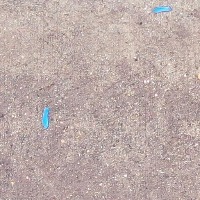
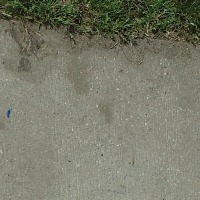
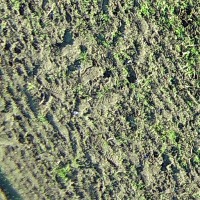
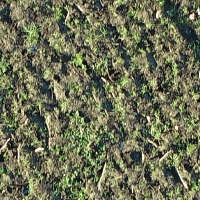
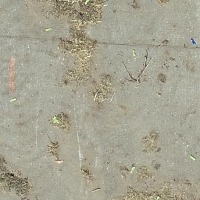
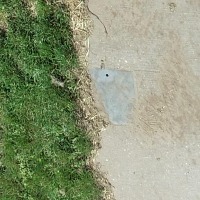
Concrete Quality Control: Since the example image shows a close-up of a concrete surface, the model could potentially be used to analyze the distribution of I-Seed classes within concrete mixes, aiding in quality control and the development of better-performing building materials.
-
Urban Planning and Landscape Design: The Artificial_Seed_Chip model can assist urban planners and landscape architects in selecting appropriate I-Seed classes for urban and suburban plantings, taking into account factors such as aesthetics, sustainability, and ecological compatibility.
-
Educational Resources: The model can be used as a learning tool for students and educators in fields related to botany, ecology, and environmental science, enabling them to better understand and differentiate between I-Seed classes and their respective characteristics.
Tell the agent what you want to build.
Cite This Project
LicenseCC BY 4.0If you use this dataset in a research paper, please cite it using the following BibTeX:
@misc{ artificial_seed_chip_dataset,
  title = { Artificial_Seed_Chip Dataset },
  type = { Open Source Dataset },
  author = { Yanuar Bomantara },
  howpublished = { \url{ https://universe.roboflow.com/yanuar-bomantara/artificial_seed_chip } },
  url = { https://universe.roboflow.com/yanuar-bomantara/artificial_seed_chip },
  journal = { Roboflow Universe },
  publisher = { Roboflow },
  year = { 2022 },
  month = { mar },
  note = { visited on 2026-07-29 },
}