Bi-Lingual Text Detection Computer Vision Model
How to use the Bi-Lingual Text Detection Detection API
Try This Model
Drop an image here or click to upload
Code Snippets
from inference_sdk import InferenceHTTPClient

CLIENT = InferenceHTTPClient(
    api_url="https://serverless.roboflow.com",
    api_key="API_KEY"
)

result = CLIENT.infer("YOUR_IMAGE.jpg", model_id="bi-lingual-text-detection/6")Or, Use Free E, English and M Detection API
Powered by general detection model
pip install inference-sdk# 1. Import the library
from inference_sdk import InferenceHTTPClient
# 2. Connect to your workspace
client = InferenceHTTPClient(
api_url="https://serverless.roboflow.com",
api_key="API_KEY"
)
# 3. Run your workflow on an image
result = client.run_workflow(
workspace_name="<YOUR_WORKSPACE>",
workflow_id="<YOUR_WORKFLOW_ID>",
images={
"image": "YOUR_IMAGE.jpg" # Path to your image file
},
parameters={
"classes": "E, English, M, Manipuri"
},
use_cache=True # cache workflow definition for 15 minutes
)
# 4. Get your results
print(result)Run on custom image
Drop an image here or click to upload



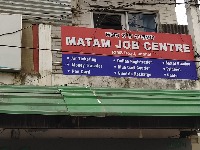

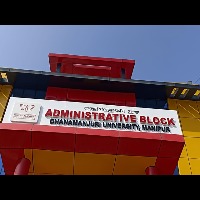

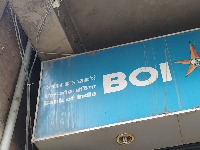

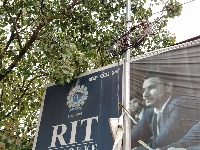




About Bi-Lingual Text Detection Model
Here are a few use cases for this project:
-
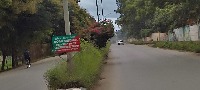
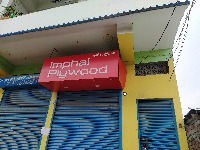
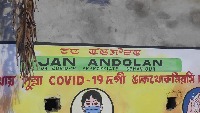
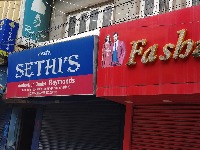
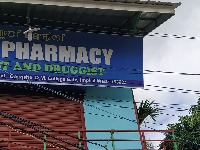
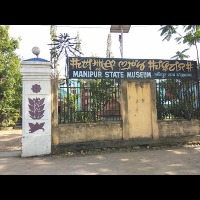
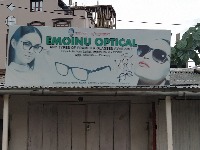
Multilingual Document Digitization: The Bi-Lingual Text Detection model can be used to extract text from scanned documents or images containing text in English, Manipuri, E, and M languages. This would help in digitizing multilingual documents, making them searchable and accessible for users who require content in these specific languages.
-
Translation Assistance: This computer vision model could be integrated into translation applications to automatically identify and extract bilingual text from images, allowing for faster and more accurate translations between the supported languages. This would be particularly useful for tourists, researchers, and businesses operating in regions where these languages are spoken.
-
Education and Language Learning: The Bi-Lingual Text Detection model can be applied in educational tools or language learning applications as an aid for students learning English, Manipuri, E, or M. By extracting bilingual text from images and providing translations, it can help students improve their reading comprehension, vocabulary, and overall language skills.
-
Multilingual Subtitle Generation: The model can be employed to analyze movie posters, promotional materials, and film frames containing multilingual texts. Through automatic text extraction, this information can be utilized to generate accurate subtitles in English, Manipuri, E, and M, catering to a diverse audience.
-
Cultural Heritage Preservation: The Bi-Lingual Text Detection model can be used to analyze and catalog historical or cultural artifacts containing inscriptions or writings in English, Manipuri, E, M. Extracting text from these resources can facilitate better understanding, research, and digital preservation of cultural heritage associated with these languages.
Tell the agent what you want to build.
Cite This Project
LicenseCC BY 4.0If you use this dataset in a research paper, please cite it using the following BibTeX:
@misc{ bi-lingual-text-detection_dataset,
  title = { Bi-Lingual Text Detection Dataset },
  type = { Open Source Dataset },
  author = { Veronica },
  howpublished = { \url{ https://universe.roboflow.com/veronica/bi-lingual-text-detection } },
  url = { https://universe.roboflow.com/veronica/bi-lingual-text-detection },
  journal = { Roboflow Universe },
  publisher = { Roboflow },
  year = { 2023 },
  month = { aug },
  note = { visited on 2026-07-29 },
}