CVUSA_aerials_segmentation Computer Vision Model
How to use the CVUSA_aerials_segmentation Segmentation API
Try This Model
Drop an image here or click to upload
Code Snippets
from inference_sdk import InferenceHTTPClient

CLIENT = InferenceHTTPClient(
    api_url="https://serverless.roboflow.com",
    api_key="API_KEY"
)

result = CLIENT.infer("YOUR_IMAGE.jpg", model_id="cvusa_aerials_segmentation/3")Or, Use Free Tree, Building and Road Detection API
Powered by general detection model
pip install inference-sdk# 1. Import the library
from inference_sdk import InferenceHTTPClient
# 2. Connect to your workspace
client = InferenceHTTPClient(
api_url="https://serverless.roboflow.com",
api_key="API_KEY"
)
# 3. Run your workflow on an image
result = client.run_workflow(
workspace_name="<YOUR_WORKSPACE>",
workflow_id="<YOUR_WORKFLOW_ID>",
images={
"image": "YOUR_IMAGE.jpg" # Path to your image file
},
parameters={
"classes": "tree, building, road, pavement"
},
use_cache=True # cache workflow definition for 15 minutes
)
# 4. Get your results
print(result)Run on custom image
Drop an image here or click to upload
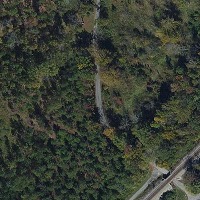

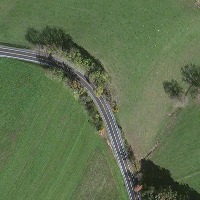

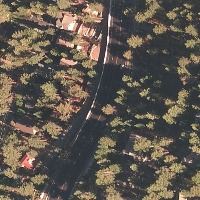

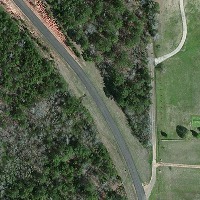
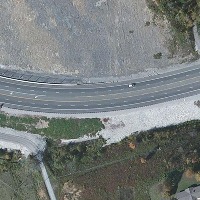

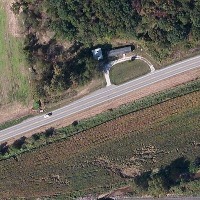

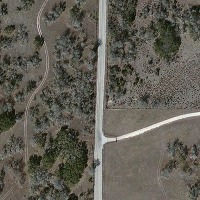

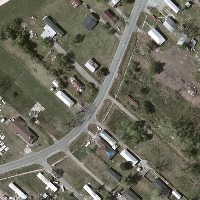
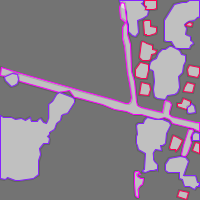
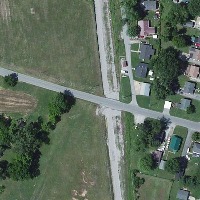

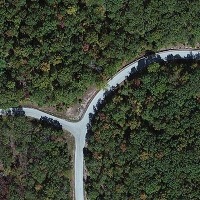


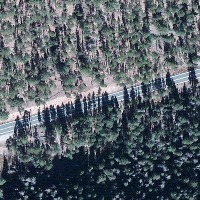
About CVUSA_aerials_segmentation Model
Here are a few use cases for this project:
-
Urban Planning and Infrastructure Development: CVUSA_aerials_segmentation can be used by urban planners and architects to analyze city layouts, infrastructure networks, and land usage. This information can be utilized to design more efficient and sustainable urban spaces or identify areas for development and improvement.
-
Disaster Management and Response: Emergency response teams and disaster management agencies could use this model to assess damage caused by natural disasters such as hurricanes, earthquakes, or floods by identifying and segmenting affected buildings, roads, and other critical infrastructure components.
-
Environmental Impact Analysis: Government authorities or environmental organizations can use this model to monitor the impact of urbanization on green spaces such as forests and parks. This data can be used for creating policies on preserving and conserving natural environments or promoting green urban design initiatives.
-
Autonomous Vehicle Navigation: CVUSA_aerials_segmentation can provide high-level mapping and segmentation data for autonomous vehicles, helping them navigate effectively through complex urban environments. By identifying roads, pavements, buildings, and trees, the model can contribute to real-time mapping and road planning for the vehicles.
-
Real Estate Analysis and Appraisal: Real estate companies can employ this model to obtain detailed information about property location, accessibility, and surrounding features like green spaces or urban density. This information can be utilized to create more accurate property valuations, marketing materials, or determine development potential.
Tell the agent what you want to build.
Cite This Project
LicenseCC BY 4.0If you use this dataset in a research paper, please cite it using the following BibTeX:
@misc{ cvusa_aerials_segmentation_dataset,
  title = { CVUSA_aerials_segmentation Dataset },
  type = { Open Source Dataset },
  author = { Tesi },
  howpublished = { \url{ https://universe.roboflow.com/tesi-uzai4/cvusa_aerials_segmentation } },
  url = { https://universe.roboflow.com/tesi-uzai4/cvusa_aerials_segmentation },
  journal = { Roboflow Universe },
  publisher = { Roboflow },
  year = { 2022 },
  month = { oct },
  note = { visited on 2026-07-29 },
}