PCBsmdComponents Computer Vision Dataset

















About PCBsmdComponents Dataset
This project was created for research work by
Dainius Varna and Vytautas Abromavičius of Vilnius Gediminias Technical University in Lithuania.
This dataset is an augmented version of the dataset.
- Visit this link to access the unaugmented/raw images: https://universe.roboflow.com/dainius/smdcomponents/ (v2 of the dataset, raw-images).
- A research paper on the project, titled A System for a Real-Time Electronic Component Detection and Classification on a Conveyor Belt was published in the MDPI Applied Sciences journal on May 31, 2022.
Department of Electronic Systems, Vilnius Gediminas Technical University (VILNIUS TECH), 03227 Vilnius, Lithuania; [email protected]
- Correspondence: [email protected]
Dataset Collection
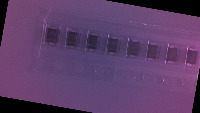
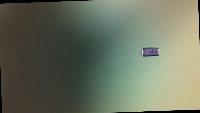
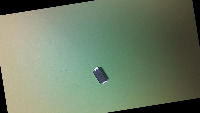
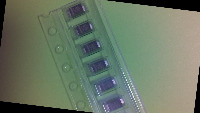
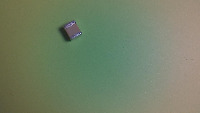
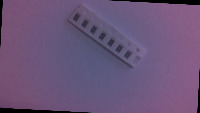
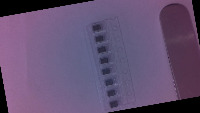
The dataset was collected using Nvidia Data Capture Control. The dataset consists of images of SMD-type electronic components, which are moving on a conveyor belt. There are four types of components in the collected dataset:
- Capacitors
- Resistors
- Diodes
- Transistors
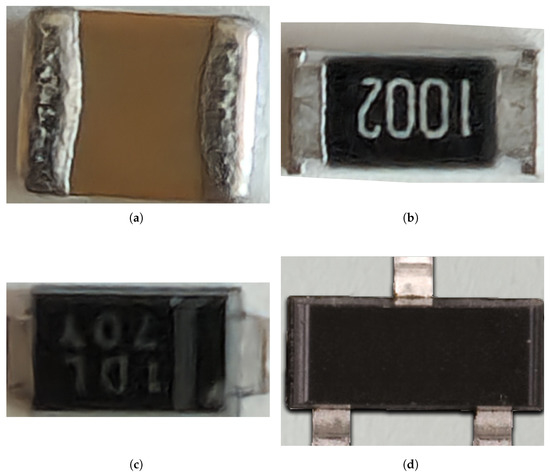 Figure 3. Four types of electronic components used for the dataset. (a) capacitor, (b) resistor, (c) diode, (d) transistor.
Abstract:
The presented research addresses the real-time object detection problem with small and moving objects, specifically the surface-mount component on a conveyor. Detecting and counting small moving objects on the assembly line is a challenge. In order to meet the requirements of real-time applications, state-of-the-art electronic component detection and classification algorithms are implemented into powerful hardware systems. This work proposes a low-cost system with an embedded microcomputer to detect surface-mount components on a conveyor belt in real time. The system detects moving, packed, and unpacked surface-mount components. The system’s performance was experimentally investigated by implementing several object-detection algorithms. The system’s performance with different algorithm implementations was compared using mean average precision and inference time. The results of four different surface-mount components showed average precision scores of 97.3% and 97.7% for capacitor and resistor detection. The findings suggest that the system with the implemented YOLOv4-tiny algorithm on the Jetson Nano 4 GB microcomputer achieves a mean average precision score of 88.03% with an inference time of 56.4 ms and 87.98% mean average precision with 11.2 ms inference time on the Tesla P100 16 GB platform.
Use Free Resistor, Diode and Transistor Detection API
Powered by general detection model
pip install inference-sdk# 1. Import the library
from inference_sdk import InferenceHTTPClient
# 2. Connect to your workspace
client = InferenceHTTPClient(
api_url="https://serverless.roboflow.com",
api_key="API_KEY"
)
# 3. Run your workflow on an image
result = client.run_workflow(
workspace_name="<YOUR_WORKSPACE>",
workflow_id="<YOUR_WORKFLOW_ID>",
images={
"image": "YOUR_IMAGE.jpg" # Path to your image file
},
parameters={
"classes": "Resistor, Diode, Transistor, Condensator"
},
use_cache=True # cache workflow definition for 15 minutes
)
# 4. Get your results
print(result)Run on custom image
Drop an image here or click to upload
Tell the agent what you want to build.
Cite This Project
LicensePublic DomainIf you use this dataset in a research paper, please cite it using the following BibTeX:
@misc{ pcbsmdcomponents_dataset,
  title = { PCBsmdComponents Dataset },
  type = { Open Source Dataset },
  author = { Dainius },
  howpublished = { \url{ https://universe.roboflow.com/dainius/pcbsmdcomponents } },
  url = { https://universe.roboflow.com/dainius/pcbsmdcomponents },
  journal = { Roboflow Universe },
  publisher = { Roboflow },
  year = { 2022 },
  month = { jun },
  note = { visited on 2026-07-29 },
}